xplore the most important LinkedIn marketing trends to watch in 2026, including AI-powered content creation, employee advocacy, video marketing, thought leadership, social selling, and B2B lead generation. Learn how businesses can leverage these trends to increase engagement
LinkedIn has changed more in the past two years than in the previous decade combined. What used to be a digital resume platform with occasional thought leadership posts has become a full-fledged marketing channel, a primary B2B lead generation engine, and increasingly, a testing ground for AI-assisted communication at a scale the platform has never seen before.
For marketers, founders, and sales professionals trying to plan their 2026 LinkedIn strategy, understanding which trends are genuinely reshaping the platform versus which are temporary fads is the difference between building a presence that compounds and wasting effort chasing tactics that will be irrelevant in six months.
This guide covers the LinkedIn marketing trends that are actually defining 2026, with a particular focus on the AI tools and messaging strategies that are separating the professionals generating real business results from everyone else still treating LinkedIn like a static online resume.
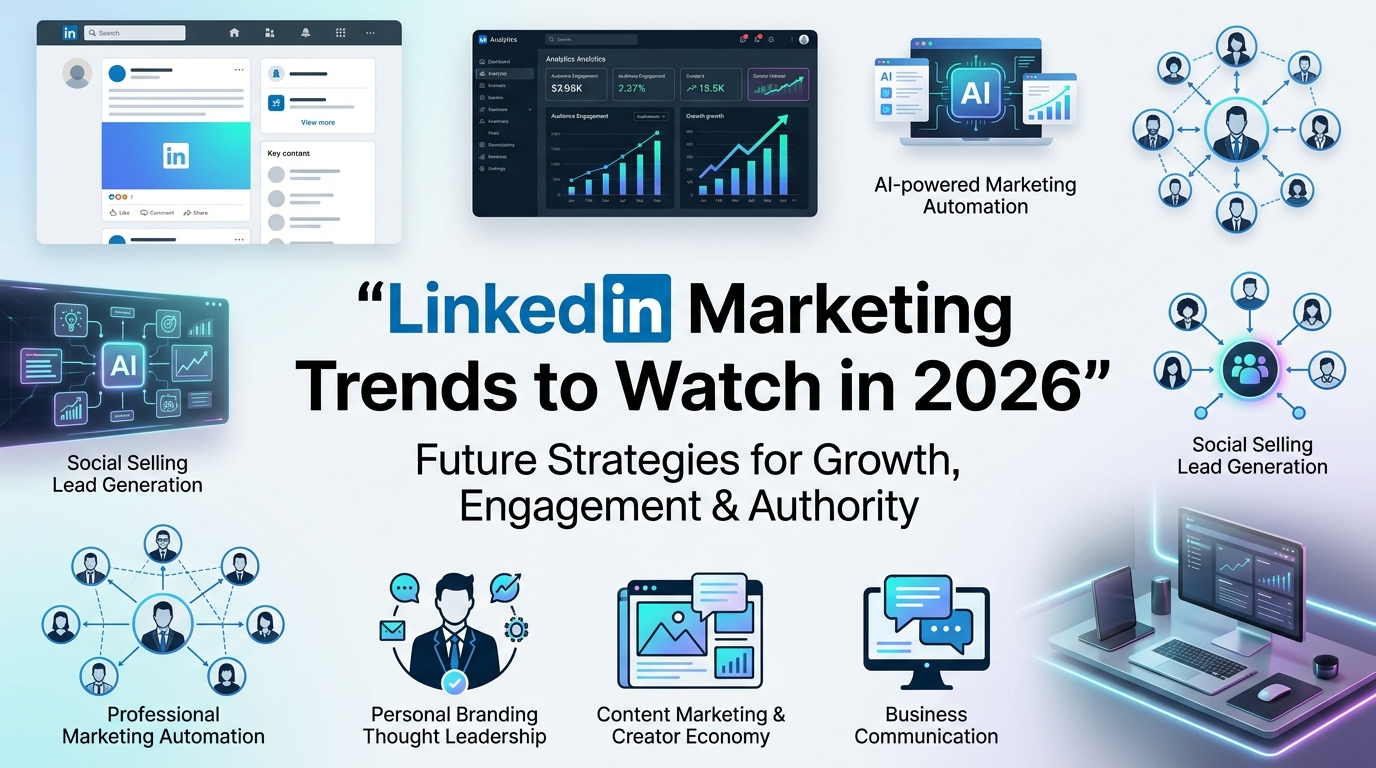
The single biggest shift in LinkedIn marketing in 2026 is how thoroughly AI tools have integrated into the daily messaging workflow of serious LinkedIn practitioners. What started as an experimental use case having an AI tool draft a connection request message has become a standard operating procedure for professionals managing meaningful message volume.
Ai models for text generation are now embedded directly into how top LinkedIn performers handle their daily communication. Rather than starting every message from a blank text box, professionals feed their raw ideas a thought captured in a voice note, a bullet point from a client call, a quick reaction to industry news into AI tools that produce a polished first draft in seconds. The professional then edits that draft to ensure it sounds genuinely like them before sending.
This shift matters for marketers because it has fundamentally changed the volume and consistency of high-quality LinkedIn communication that is possible for a single person to sustain. A marketer who previously could send fifteen genuinely thoughtful messages per day can now sustain forty or fifty, because the mechanical drafting work that previously consumed the bulk of their time has been compressed into a quick editing pass.
TextAI platforms and dedicated llm text generator tools built specifically for professional messaging contexts have proliferated in 2026, each competing on the naturalness of their output and how well they adapt to an individual user's specific communication style over repeated use.
In previous years, message reply quality was treated as an individual soft skill something some professionals were naturally good at and others were not. In 2026, knowing how to reply to LinkedIn messages effectively has become a systematized, trainable discipline, with marketing and sales teams building explicit frameworks and training programs around it.
This shift reflects a broader recognition that LinkedIn messaging is not a peripheral activity it is often the actual moment where leads convert into customers, where partnerships form, and where the relationships that drive long-term business value actually get built. Treating it with the same rigor previously reserved for sales call scripts and email sequences has produced measurably better outcomes for the organizations that have made this shift.
The reply framework that has emerged as the 2026 standard among high-performing LinkedIn teams follows a consistent structure: acknowledge the specific content of the message rather than responding generically, add genuine value through a relevant insight, question, or resource, and close with a low-friction invitation to continue the conversation.
Marketing teams are now building this framework directly into their team training, their text response generator tooling, and their onboarding materials for new team members managing company LinkedIn presence treating effective message reply as a teachable skill with clear quality standards, not an unpredictable individual talent.
An interesting sub-trend within this broader shift is how organizations are now training employees on how to reply to LinkedIn recruiter outreach not because they expect employees to leave, but because every interaction an employee has on LinkedIn reflects on the broader organizational brand. A thoughtful, professional response to a recruiter even one declining interest represents the company well. A dismissive or unprofessional response reflects poorly, regardless of the employee's personal career intentions.
Forward-thinking employer brand teams in 2026 are including guidance on professional LinkedIn message etiquette, including recruiter responses, as part of broader employee advocacy and brand ambassador programs.
Automatic reply linkedin functionality has evolved significantly from the simple "I'm currently unavailable" away messages of previous years into sophisticated systems that maintain brand voice, route messages intelligently, and provide genuinely useful information to the people reaching out even when the intended recipient is unavailable.
For company pages and high-volume individual creators, linkedin auto reply tools in 2026 have moved well beyond simple absence notifications. Modern implementations can identify the category of incoming message a sales inquiry, a recruiter approach, a partnership proposal, a customer support question and route or respond to each category differently, providing genuinely useful immediate information while still flagging messages that need authentic human attention.
The most sophisticated automatic reply linkedin implementations in 2026 maintain a consistent brand voice that has been specifically calibrated rather than using generic, obviously automated language. This calibration work training the auto-reply system on the specific tone and phrasing patterns of the brand or individual has become a standard part of LinkedIn presence setup for serious marketing operations.
A significant 2026 development is the deeper integration between LinkedIn messaging and email follow-up systems. Auto reply gmail tools with AI capability now frequently connect directly to LinkedIn conversation history, allowing for reply to email confirmation messages and follow-up sequences that maintain full context from the originating LinkedIn conversation rather than starting the email relationship from scratch.
This integration matters because the moment a valuable LinkedIn conversation needs to move to email for scheduling, for sending a proposal, for any more formal next step losing the conversational context and starting fresh creates friction that measurably reduces conversion rates. The artificial intelligence response capability connecting these two channels has become a meaningful competitive advantage for sales and marketing teams managing high lead volume through LinkedIn.
Commenting on other people's LinkedIn content used to be treated as an informal, optional activity. In 2026, strategic discussion engagement has become a measured, budgeted marketing activity with dedicated tooling, clear performance metrics, and trained team members responsible for executing it consistently.
A discussion response generator has become standard infrastructure for marketing teams running serious LinkedIn programs in 2026. These tools analyze the content of a target post and generate substantive response options adding a relevant data point, offering a contrarian perspective, asking a genuinely interesting follow-up question that a human team member reviews, personalizes, and posts.
This is fundamentally different from the comment automation tools of previous years that generated generic, low-effort responses at scale. The 2026 generation of discussion post reply generator tools is specifically designed to produce substantive content that a human reviewer can quickly customize, maintaining quality while dramatically increasing the volume of meaningful engagement a single team member can sustain.
Marketing teams running structured LinkedIn engagement programs now track specific metrics for this activity comments posted per week, profile visits generated from comment engagement, connection requests received as a direct result of visible commenting activity treating it with the same measurement discipline applied to paid advertising campaigns.
The broader 2026 trend toward AI-assisted review reply management common in the context of Google Business reviews and e-commerce platforms has extended into how organizations handle LinkedIn recommendations and endorsements. An ai review generator assists not just in requesting recommendations efficiently but in crafting thoughtful responses and reciprocal recommendations that build genuine professional goodwill at scale.
Organizations with structured employee advocacy programs are increasingly using these tools to ensure that every recommendation request and every reciprocal recommendation opportunity is handled with consistent quality, rather than depending on individual employees remembering to follow through.
LinkedIn's newsletter feature, which had a relatively quiet launch several years ago, has become one of the most strategically important content formats on the platform in 2026. Unlike standard feed posts, which have a short visibility window before disappearing into algorithmic obscurity, newsletters deliver directly to subscriber inboxes and notification centers creating a genuinely owned audience relationship within LinkedIn's ecosystem.
Marketing teams in 2026 are treating LinkedIn newsletters with the same strategic seriousness previously reserved for email marketing building consistent publishing schedules, developing distinct editorial voices, and measuring subscriber growth and engagement as core marketing KPIs rather than a secondary content experiment.
The connection to AI tooling here is direct: ai models for text generation and llm text generator platforms have made the consistent, high-quality content production that a successful newsletter requires significantly more achievable for marketing teams without large dedicated editorial staff. A weekly newsletter that would have required a full-time writer to sustain manually can now be produced through an efficient AI-assisted drafting and editing workflow by a marketer managing multiple responsibilities.
Predicting sentence technology AI tools that anticipate and suggest sentence completions in real time as professionals compose LinkedIn messages has moved from a novelty feature to a standard productivity tool integrated into many professionals' daily LinkedIn workflow in 2026.
For marketing and sales teams managing high message volume, this technology produces meaningful aggregate time savings. The formulaic elements of professional messaging greetings, transitions, standard closing phrases become significantly faster to compose, freeing cognitive attention for the personalized, substantive content that actually drives response rates and relationship quality.
A specific and increasingly popular category within this broader trend is rizz ai response technology tools designed to analyze the tone and conversational register of an incoming message and generate response suggestions calibrated to match that energy. A formal, precise message from a senior executive warrants a different response tone than an enthusiastic, casual message from a peer, and these tools have become sophisticated enough to detect and adapt to that distinction automatically.
For marketing and sales teams managing communication across a wide range of prospect personalities and seniority levels, rizz ai response capability has become a meaningful tool for maintaining appropriate tone calibration at scale something that previously required significant individual judgment and experience to execute consistently well.
Deepword and similar semantic analysis platforms have gained adoption among LinkedIn marketing teams seeking to understand and optimize how their messaging is actually landing with recipients. These tools analyze message language patterns and correlate them with response rates, identifying specific phrasing choices, message lengths, and structural patterns that are measurably improving or hurting engagement.
This data-driven approach to message optimization represents a significant maturation of LinkedIn marketing practice in 2026 moving from intuition-based messaging decisions to genuinely evidence-based optimization, similar to how email marketing has long used A/B testing and analytics to refine subject lines and content.
For years, LinkedIn marketing relied heavily on static message templates pre-written scripts for connection requests, follow-ups, and common scenarios that were copy-pasted with minimal customization. In 2026, AI template generation from text instructions has largely replaced this static approach with a dynamic system that produces genuinely customized templates on demand.
Rather than maintaining a fixed library of templates that everyone on a team uses identically and that recipients increasingly recognize and discount because they have seen the same template from multiple senders marketing and sales teams now describe the specific scenario, tone, and goal they need, and AI tools generate a tailored template in seconds. This template still requires personalization before sending, but it starts from a genuinely relevant foundation rather than the same generic script every other team member is also using.
This shift has measurably improved response rates across organizations that have adopted it, because recipients are encountering genuinely varied, situationally appropriate messaging rather than the recognizable patterns of mass-templated outreach that LinkedIn users have become increasingly skilled at identifying and ignoring.
For LinkedIn creators, executives, and sales leaders who receive substantial inbound message volume, implementing an answer bot for handling initial, routine inquiries has become standard practice in 2026 freeing personal attention for the conversations that genuinely benefit from individual engagement.
The most effective answer bot implementations handle the early information-exchange phase of common conversation types basic questions about services, availability, or next steps while maintaining a warm, conversational tone that does not feel mechanically automated. By the time a prospect reaches a genuine human conversation, much of the basic qualification and information exchange has already happened efficiently, making the eventual personal conversation more productive for both parties.
This trend reflects a broader 2026 pattern across LinkedIn marketing: using automation strategically for the repetitive, low-value-add portions of communication while reserving genuine human attention for the moments that actually require judgment, empathy, and relationship-building skill that AI cannot replicate.
As LinkedIn increasingly functions as the top of a broader sales and marketing funnel rather than a self-contained platform, tools that smooth the transition from LinkedIn conversation to email follow-up have become increasingly important. The mailmeteor ai email writer and comparable tools have gained significant adoption in 2026 specifically for this cross-platform handoff use case.
Understanding how to reply for an email that originates from a LinkedIn relationship requires a specific tonal calibration warm enough to maintain the relationship momentum built on LinkedIn, professional enough to match the more formal conventions of business email correspondence. AI email writing tools that specifically understand this transition have become standard infrastructure for sales and marketing teams managing pipeline that flows from LinkedIn engagement into more formal follow-up processes.
For reply to email confirmation scenarios specifically confirming meeting times scheduled after LinkedIn conversations, acknowledging proposal receipt following LinkedIn-initiated business discussions this cross-platform consistency has become an expected standard of professionalism that AI tools make achievable at scale without requiring significant additional manual effort from sales and marketing teams.
LinkedIn's algorithm updates throughout 2025 and into 2026 have increasingly prioritized content and accounts that generate genuine two-way engagement substantive comments, meaningful replies, sustained conversation threads over content that generates passive likes without deeper interaction.
This algorithmic shift has direct implications for marketing strategy. Content designed purely for broadcast announcements, promotional posts, content with no genuine discussion hook increasingly underperforms relative to content specifically designed to generate substantive comment threads and conversation.
Marketing teams that have adapted to this shift are deliberately structuring content to invite genuine discussion asking specific, answerable questions, taking clear positions that invite agreement or pushback, and actively engaging with every comment their content receives using the discussion response generator and message reply strategies covered earlier in this guide. The compounding effect of consistently strong comment engagement, in turn, improves the algorithmic distribution of future content, creating a positive feedback loop that rewards genuine community-building over pure broadcast strategies.
With ten significant trends reshaping LinkedIn marketing in 2026, the practical question for most marketing teams is how to prioritize implementation given limited time and resources.
Start with the messaging fundamentals. Implementing a clear how to reply to LinkedIn messages framework across your team, combined with basic text reply generator tooling for high-volume scenarios, produces immediate, measurable improvement in response quality and conversion rates with relatively modest implementation effort.
Layer in automatic reply linkedin systems for absence coverage and high-volume routing next, ensuring no inbound opportunity goes unacknowledged even during busy periods. Then invest in structured discussion engagement equipping your team with discussion response generator tools and establishing clear metrics for comment-based engagement as a deliberate marketing activity rather than an informal afterthought.
For organizations with the resources to invest further, building a LinkedIn newsletter strategy and establishing AI-assisted cross-platform follow-up sequences connecting LinkedIn to email represent the next tier of investment producing compounding owned-audience and pipeline benefits that justify the additional resource commitment.
The overarching theme across every trend covered in this guide is the same: LinkedIn in 2026 increasingly rewards genuine, substantive human engagement and the AI tools reshaping the platform are most effective when they amplify that genuine engagement rather than attempting to replace it.
Ai models for text generation, discussion response generator platforms, automatic reply linkedin systems, and mailmeteor ai email writer tools all share a common successful use pattern: they handle the mechanical, repetitive aspects of professional communication, freeing human marketers and sales professionals to invest their genuine attention in the conversations, relationships, and creative decisions that actually require human judgment.
The marketing teams and individual professionals who will see the strongest results from LinkedIn in 2026 are not the ones using the most aggressive automation. They are the ones using AI tools thoughtfully to sustain a higher volume of genuinely high-quality human engagement than would be possible working entirely manually building real relationships at a scale the platform has never previously made achievable.

Rachel Stanton is a tech writer who specialises in AI productivity tools for busy professionals. He tests and reviews the latest AI software so you can make smarter decisions about where to invest your time and money.
AIReplyBee is your AI-powered LinkedIn reply generator that helps you create authentic, engaging responses in seconds.
Generate your first replyWhat is a collaboration post? Learn how Instagram collab posts work, why they boost reach, and how to set one up step-by-step.
InMail on LinkedIn lets you message anyone, even outside your network. See how it works, pricing, credits, and tips to boost replies.
Learn how to use ChatGPT effectively with the PTCF framework, 7 practical steps, and a real before/after example that actually works.